

Table of Contents
Background
The literature indicates that 10-20% of women suffer from postpartum depression (PPD) after childbirth. The onset of PPD usually occurs within twelve weeks after delivery; if it is not detected early and is left untreated symptoms can last 1-2 years [1,2].
There are a variety of interventions available to treat PPD, such as education, support, therapy and medication [3]. However, these interventions are disappointingly underused. The Healthy People’s 2010 goal is to increase the percentage of adults with recognized depression who receive treatment to 50% (current measure 23%). This objective (18-9b) is not limited to women experiencing postpartum depression, but certainly includes them.
Risk Factors
PPD is a debilitating illness that affects women of all types. However, higher rates of PPD are reported among women who:
- Have low education
- Are of race other than white
- Are unmarried
- Are on Medicaid
- Have a lower socioeconomic status
- Have an unintended pregnancy
- Experience abuse
- Experience significant life stressors
- Have a history of depression
Utah Data
Utah PRAMS 2004 data (Pregnancy Risk Assessment Monitoring System) indicates that 14.7% of Utah women who delivered a live birth reported PPD. A quarter (25.5% N~ 1666) of women with less than high school education reported PPD, compared to 8.5% (N~1109) of women who completed college. (See figure 1).

Of the women who reported PPD, 39.5% reported seeking help for the depression. Women who had a history of seeking help for depression during pregnancy were the most likely to seek help postpartum (72.8% vs. 24.9%).
Surprisingly, women who lived in rural communities also had higher rates of seeking help for their depression (49.4% vs. 35.3%). (See figure 2).
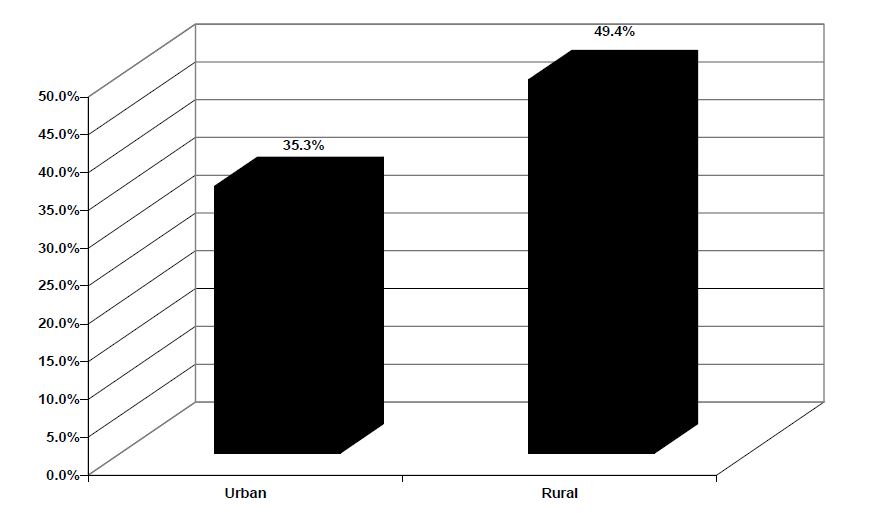
Figure 2. Among Women Who Reported Postpartum Depression, The Percentage of Women Who Sought Help, by Urban/Rural Residency– Utah PRAMS 2004
Services
Maternal and Child Health Library: A virtual guide to MCH information Knowledge Path: Postpartum Depression: mchlibrary.info/KnowledgePaths/kp_postpartum.html
The Macarthur Initiative on Depression and Primary Care at Dartmouth & Duke: www.depression-primarycare.org/.
References
- Horowitz, J. A., Goodman, J. (2004) A Longitudinal Study of Maternal Postpartum Depression Symptoms. Research and Theory for Nursing Practice: An International Journal, 18 (2/3), 149-163.
- Postpartum Depression. The National Women’s Health Information Center. Project of the U.S. Department of Health and Human Services, Office of Women’s Health. Retrieved from http://www.4woman.gov/faq/postpartum.htm on October 25, 2006.
- Genovese, Alisa. Thoughts and Essays: A Guide to Postpartum Emotional Difficulties Common Questions. Retrieved from http://www.supportgroupformothers.com/thoughts8.htm on October 25, 2006.
